
Augmented Reality App Development: The Complete Guide for 2026
Discover how augmented reality app development is transforming industries in 2026, from marker-based and location AR to the best platforms and development process.
iSkylar Editorial Team
PRINCIPAL ARCHITECT11 MIN READ
Introduction
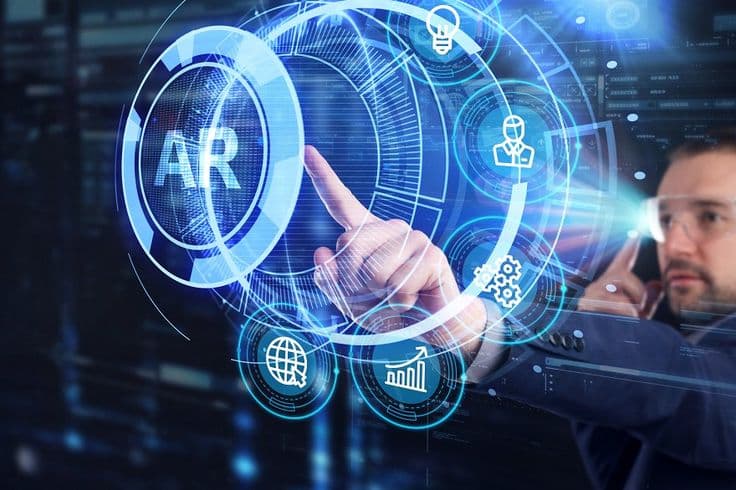
Augmented Reality (AR) has shifted from futuristic speculation to a core driver of business transformation. In 2026, AR-powered applications are embedded across healthcare, manufacturing, retail, and education — and the companies investing now are pulling ahead of those still watching from the sidelines.
For software teams and digital product leaders, understanding how AR apps are built, which industries are adopting them fastest, and what platforms to build on is no longer optional — it's a strategic imperative.
In this guide, we break down everything you need to know about augmented reality app development: what AR is, how it works, the types of apps you can build, industries leading adoption, and the best development platforms available today.
What Is Augmented Reality?
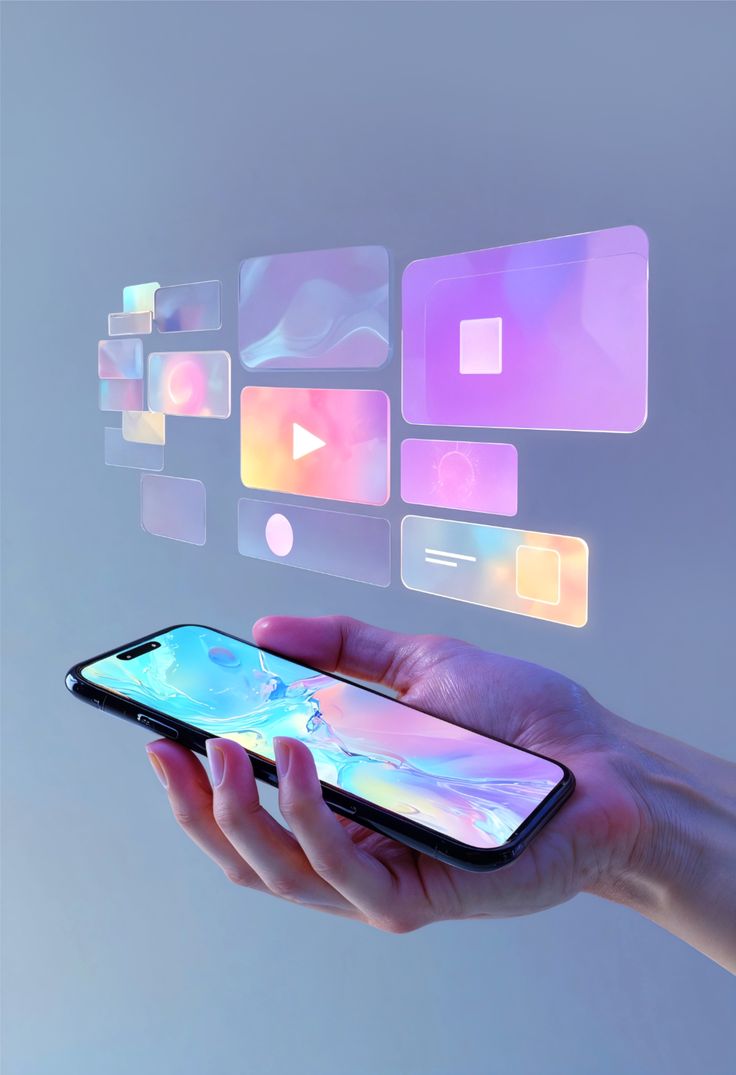
Augmented reality is a technology layer that overlays digital content — images, data, 3D objects, animations — onto the physical world in real time. Unlike Virtual Reality (VR), which creates a fully synthetic environment, AR enhances your existing surroundings without replacing them.
AR systems operate on three foundational principles:
- Blending real and virtual worlds — digital objects coexist within the physical environment
- Real-time interaction — overlays respond dynamically to user movement and input
- Precise spatial registration — virtual elements are accurately anchored to real-world positions
Crucially, AR doesn't require expensive hardware. Most AR experiences run on everyday smartphones and tablets using the device camera. Dedicated AR glasses and headsets (like Apple Vision Pro or Microsoft HoloLens) extend the experience, but are not a prerequisite for entry.
Types of Augmented Reality Apps
1. Marker-Based AR
Marker-based AR triggers a digital overlay when the device camera recognises a specific visual pattern — typically a QR code, product logo, or printed image. The app then renders a 3D model, animation, or UI element on top of the recognised marker.
Best for: Product packaging, retail experiences, printed marketing collateral, and event activations.
Example use case: A customer scans a product label with their phone and instantly views a 3D assembly animation or usage tutorial.
2. Location-Based AR
Location-based AR uses GPS, compass, and accelerometer data to serve contextual digital content based on the user's real-world position. No visual marker is required — the device's coordinates trigger the overlay.
Best for: Navigation, tourism, real estate, and outdoor games.
Example use case: A traveller points their phone at a historical building and instantly sees an overlay with architectural history, visitor ratings, and directions to the entrance.
3. Projection-Based AR
The most sophisticated category, projection-based AR scans and recognises physical objects rather than flat markers, then overlays interactive digital layers on them. Users can interact with both real and virtual elements simultaneously.
Best for: Manufacturing training, surgical simulation, industrial maintenance, and complex assembly workflows.
Example use case: A factory technician views an AR overlay on a machine showing real-time diagnostic data, maintenance history, and step-by-step repair instructions — all without picking up a manual.
| AR Type | Trigger Mechanism | Best Industry Fit | Complexity |
|---|---|---|---|
| Marker-Based | QR code / image recognition | Retail, Marketing, Publishing | Low–Medium |
| Location-Based | GPS + sensor data | Tourism, Navigation, Gaming | Medium |
| Projection-Based | Object recognition + depth sensing | Manufacturing, Healthcare, Defence | High |
Industries Investing in AR App Development
Gaming
Gaming remains the highest-volume consumer of AR technology. Titles like Pokémon GO demonstrated the mass-market potential of location-based AR. Today, developers are building AR games that turn entire cities into interactive playgrounds — and the next leap will come when always-on AR glasses remove the need to hold up a phone.
Healthcare
AR is transforming both clinical practice and medical education. Surgeons use AR overlays during procedures to display patient vitals, scan data, and anatomical references directly in their field of view. Medical students train on AR simulations before touching a patient. Hospitals deploy AR for rehabilitation exercises, patient wayfinding, and remote specialist consultations.
Manufacturing & Industrial
Manufacturing may be where AR delivers the most immediate, measurable ROI. AR applications guide workers through complex assembly sequences, surface real-time equipment diagnostics, and flag quality defects before they leave the production line. Companies report up to 40% reduction in assembly errors after deploying AR-assisted workflows.
Marketing & Retail
Brands use AR to collapse the gap between discovery and purchase. AR try-on features (glasses, furniture, cosmetics), interactive packaging, and immersive virtual showrooms are now table-stakes for leading e-commerce experiences. IKEA Place and Sephora's Virtual Artist set the benchmark that mid-market brands are now racing to match.
Education & Training
AR turns passive learning into active, spatial experiences. Students dissect virtual frogs, walk through ancient Rome, or manipulate molecular structures — all through a tablet. Corporate training teams deploy AR simulations for safety drills, equipment operation, and onboarding — reducing training time and improving knowledge retention by measurable margins.
Defence & Military
Defence organisations worldwide are deploying AR for tactical situational awareness, equipment maintenance, and mission briefing visualisation. AR heads-up displays give soldiers real-time navigation, target data, and comms overlays — reducing cognitive load during high-pressure operations.
Tourism & Navigation
AR layers rich contextual information onto the physical world for travellers — restaurant reviews that float above storefronts, historical overlays on monuments, interactive hotel check-in flows, and indoor wayfinding in airports or hospitals. The result: richer experiences that increase satisfaction and time-on-site for tourism operators.
"AR is not a single-industry trend. It's a horizontal capability that rewires how humans interact with physical spaces — and every industry with a physical touchpoint is a target."
Top AR Development Platforms in 2026
Choosing the right development platform is the most consequential technical decision in any AR project. Here is a breakdown of the leading options:
| Platform | Best For | Platform Support | Key Strength |
|---|---|---|---|
| ARKit (Apple) | iOS-first AR experiences | iOS / iPadOS | Best-in-class depth sensing on iPhone/iPad |
| ARCore (Google) | Android AR apps | Android | Broad Android device compatibility |
| Vuforia SDK | Enterprise & industrial AR | iOS, Android, Windows, Unity | Industry-grade image tracking |
| Wikitude SDK | Cross-platform consumer apps | iOS, Android, PhoneGap, Xamarin | Strong geolocation AR support |
| Unity + AR Foundation | Cross-platform game & enterprise AR | iOS, Android, HoloLens, Magic Leap | One codebase, many targets |
| 8th Wall | Web-based AR (no app install) | Browser (iOS & Android) | Zero-friction WebAR for campaigns |
Platform selection should be driven by three variables: target device ecosystem (iOS, Android, or cross-platform), use case complexity (consumer marketing vs. industrial workflow), and team stack (native vs. Unity vs. web).
For most enterprise projects requiring multi-platform support, Unity + AR Foundation or Vuforia deliver the best combination of capability and maintainability. For rapid-cycle marketing campaigns, 8th Wall's WebAR approach removes the app-install barrier entirely.
The AR Development Process: What to Expect
Building an AR application involves disciplines beyond standard mobile development. Here is the typical engagement structure:
- Discovery & Use Case Mapping — Define the AR trigger, target device, and expected user flow. Not every problem needs AR; validate the fit before building.
- Platform & SDK Selection — Choose the stack based on target platform, team expertise, and budget constraints.
- 3D Asset Creation — AR experiences live or die on the quality of 3D models and animations. Budget for skilled 3D artists or an asset library.
- Core AR Development — Spatial anchoring, marker recognition, object tracking, and overlay rendering.
- Backend Integration — Most enterprise AR apps pull real-time data (inventory, diagnostics, patient records) from existing systems via API.
- Device Testing — AR performance varies significantly across device generations. Test on a wide hardware matrix.
- Deployment & Iteration — AR user behaviour is hard to predict in testing; plan for rapid post-launch iteration based on real usage data.
Why AR App Development Requires a Specialist Partner
AR development combines spatial computing, real-time rendering, device sensor fusion, and backend data integration in ways that standard mobile teams are not equipped to handle out of the box. Choosing a development partner with proven AR delivery experience is the difference between a compelling product and an expensive prototype that never ships.
At iSkylar Technologies, we build custom AR applications for enterprises and product teams across healthcare, manufacturing, retail, and education. Our offshore development model gives you access to senior AR engineers at a fraction of the cost of local hiring — with full project ownership, transparent delivery milestones, and post-launch support built in.
If you are exploring an AR build, our team can validate your concept, recommend the right platform, and scope a delivery plan within a single discovery session.
The Road Ahead: AR Without a Screen
The next frontier of AR is the elimination of the screen itself. Today, AR requires a device — a phone, a tablet, a headset. As spatial computing hardware matures (Apple Vision Pro, Meta Orion glasses, and next-generation lightweight AR spectacles), the overlay moves from a held device to always-on ambient computing.
With global mobile device adoption continuing to expand and enterprise AR investment accelerating, the window for first-mover advantage in AR-powered products and workflows is open — but it will not stay open indefinitely.
The companies that build AR capability into their products and operations today are not just improving current workflows. They are laying the infrastructure for a world where digital and physical are permanently interwoven.
WRITTEN BY
iSkylar Editorial Team
iSkylar Technologies is a software development and AI engineering company helping businesses across the US, UK, Australia, and Canada build custom digital products — from mobile apps and AR experiences to enterprise automation systems.
Further Reading


Stay at the forefront of innovation.
innovation.
Join our inner circle of industry leaders and get exclusive insights delivered to your inbox every Thursday morning.
WE RESPECT YOUR PRIVACY. NO SPAM, EVER.